
 7 months ago
AI software that can be embedded into smart glasses has won a £1m prize for technology to help people with dementia.
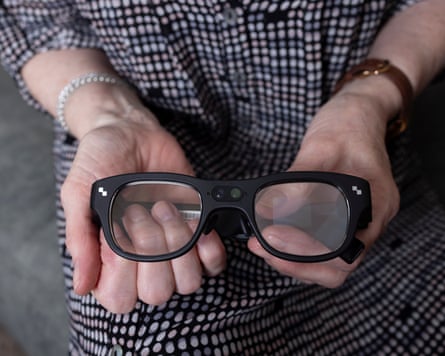
Built into chunky, black-rimmed frames that have a camera, microphone and speakers, the tech – known as CrossSense – guides wearers through everyday life by means of a chatty assistant called Wispy.
Not only can Wispy offer prompts and feedback during tasks – through verbal cues and text that floats in front of the wearer’s eyes – but it can also ask questions, engage in light conversation and aid reminiscences.
The software has won the Longitude prize on dementia, one of a number of awards designed and delivered by Challenge Works and supported by Nesta.
Funded by Alzheimer’s Society and Innovate UK, the prize aimed to encourage the development of technology to help people with dementia stay independent for longer. About 150 million people globally are expected to be living with dementia by 2050.
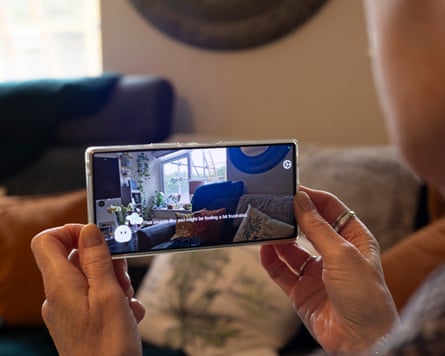
Szczepan Orlins, the chief executive of CrossSense Ltd, said the prize money would help to bring the company’s product to market. He said a smartphone version would be available at the end of this year and the CrossSense-enabled smart glasses were expected to be available in early 2027.
Orlins added that while CrossSense Ltd provided the AI software, the team had been working with frames produced by various hardware companies. These can be fitted with prescription lenses and are compatible with hearing aids.
“With the prize, we will be running a pilot with smart glasses in the last quarter [of 2026] for four weeks in people’s homes, which would give us enough data to know that this is ready,” Orlins said.
Orlins said information such as the level of care the wearer needs could be entered in an accompanying app, and Wispy used machine learning to adapt to users’ needs – including changes in their condition.

The CrossSense technology is expected to cost about £50 a month per subscription, while the smart glasses cost up to £1,000 – although they may become cheaper. The CrossSense-enabled smart glasses will initially be marketed directly at consumers and the aim is that they will eventually be available through the NHS.
Prof Julia Simner, of the University of Sussex, who was the science lead for the team, tested CrossSense with 23 pairs of people living with dementia and their carers. The study, which has not yet been peer-reviewed, revealed that without the smart glasses, participants with dementia could name only 46% of household items correctly. With the glasses, the figure was 82%.
“Crucially, the benefit lasted even after the glasses were removed,” Simner said, adding that an hour after taking the glasses off the figure was 78%.
Dr Foyzul Rahman, an expert in cognitive decline at Loughborough University who was not involved with the project, said the breakthrough made by CrossSense was offering real-time prompts and feedback during tasks rather than providing simple one-off reminders.
Rahman said larger, more carefully controlled studies or randomised trials were needed to test whether such devices delivered meaningful benefits in everyday life, while there were also ethical considerations over consent, given the technology will collect data from the wearer.
He also said a challenge for assistive technologies was whether people would really use them. In particular, he noted the battery life for the smart glasses was only one hour, meaning a portable power bank was required.
But for Carole Greig, 70, who was diagnosed with Alzheimer’s almost three years ago and has tested the CrossSense-empowered glasses, the technology is exciting.
“For people with the condition like mine who’ve got cognitive impairment, it’s just an amazing thing,” she said. “How fantastic that we can be given some more independence, that we’re going to be able to cope on our own and not be a burden. And not only that, it’s not just [not] being a burden, it’s enjoying your life.”